What 14 Years of Candy Crush Can Teach Anyone Building Live Games
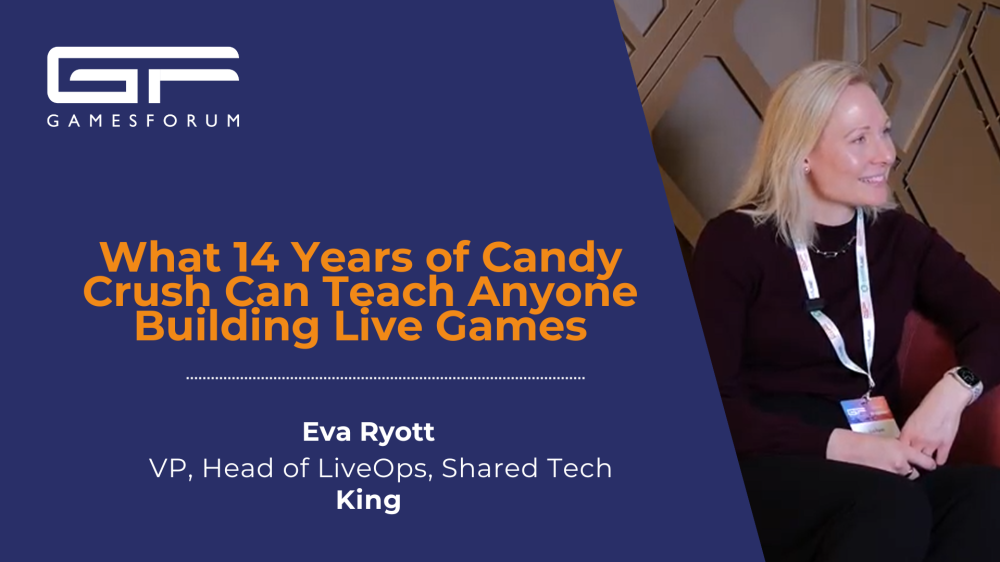
Eva Ryott, Head of Live Ops at King, recently spoke at Gamesforum Barcelona. And, if you’re building, publishing, scaling, or even just thinking about live service games - her insights could be helpful in long-term thinking.
We, as an industry, definitely love talking about launches. Trailers. UA spikes. Soft launch metrics. Day-one retention charts. And this is not to say that all that stuff doesn't matter.
But Eva dropped a truth that offers a little food for thought.
“In reality, the work only starts when you launch.” Let’s unpack that.
When Candy Crush Saga launched, it had 65 levels.
Today it has over 21,000 levels.
But it’s not just levels. It’s:
- Seasonal events
- Competitive tournaments (like All Stars)
- Feature refreshes
- Offer systems
- Economy tuning
- UX refinements
Lesson #1: Launch is not the peak investment moment. It’s the starting gun.
Here’s something most teams underestimate: some players have been playing Candy Crush for 14 years.
Think about that.
These players:
- Know the mechanics inside out
- Identify with progression status
- Sit at end-of-content
- Treat “being caught up” as part of their identity
Now imagine you’re the Live Ops lead. You must:
- Keep the game recognisable
- Avoid alienating veterans
- Still attract new players
- Prevent fatigue
- Prevent boredom
Eva described it perfectly: keeping the game familiar while keeping it fresh.
Lesson #2: The longer your game lives, the more player identity becomes part of your product design constraints.
Eva sits at the intersection of UX, product, and Live Ops. And yes - disagreements happen.
Design wants elegance.
Product wants impact.
Data wants proof.
So what resolves it?
Two anchors:
- Clear player-focused goal
- All facts on the table
Facts =
- In-game behavioural data
- A/B testing
- Prototype feedback
- Community sentiment
Lesson #3: When teams disagree, don’t argue opinions - align on player outcome and evidence.
That’s where art and science actually meet.
More content can feel like pressure to long-term players, surprisingly. In fact, some end-of-content players reacted negatively to extra levels.
Why?
Because new levels meant:
- More pressure to stay caught up
- More effort to maintain identity
- More obligation
Lesson #4: Player engagement ≠ infinite appetite.
Especially in long-running games, your most loyal players may experience content fatigue differently than casual ones.
The fix? Not guessing.
But:
- Behavioural analysis
- Deep segmentation
- Combining quantitative data with qualitative feedback
This is mature Live Ops thinking.
Fourteen years of engagement doesn’t happen accidentally.
It requires:
- Cadence discipline
- Feature lifecycle planning
- Economy evolution
- Scalable content pipelines
- Event architecture
- Cultural sensitivity to community
Lesson #5: Retention at 10+ years is operational excellence, not nostalgia.
What indie & mid-size studios should actually take from this
You may not have King’s scale, but the principles apply at any level:
1️⃣ Think beyond version 1.0
If your feature isn’t Live Ops-friendly, it’s a liability.
2️⃣ Design for long-term identity
How will players define themselves inside your game?
3️⃣ Instrument behavioural metrics early
Don’t just track D1 retention.
Track:
- Progression completion rates
- Difficulty spikes
- Content consumption velocity
- End-of-content behavior
4️⃣ Build feedback loops
Forums. Prototypes. A/B tests. Community listening.
5️⃣ Plan for evolution, not explosion
Final thought
In an industry obsessed with:
- Viral spikes
- CPI wars
- Launch trailers
- Funding rounds
There’s something refreshing about a 14-year success story built on disciplined iteration. The real work, and the real opportunity, begins after that. Until next build cycle.
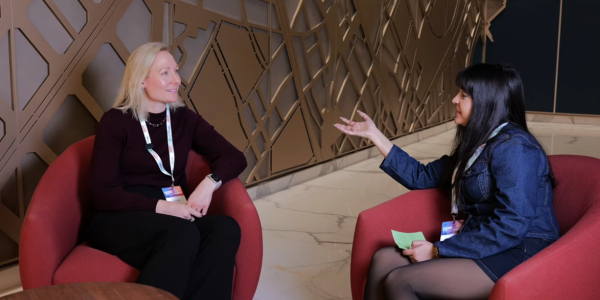
Watch the full interview here for all of Eva's insights.








Home of the Gamesforum events series and leading mobile game analysis. Discover everything you need to know about mobile games marketing and monetization.