Short-Term Revenue vs Long-Term Retention: Rethinking the Ad Monetization Balance
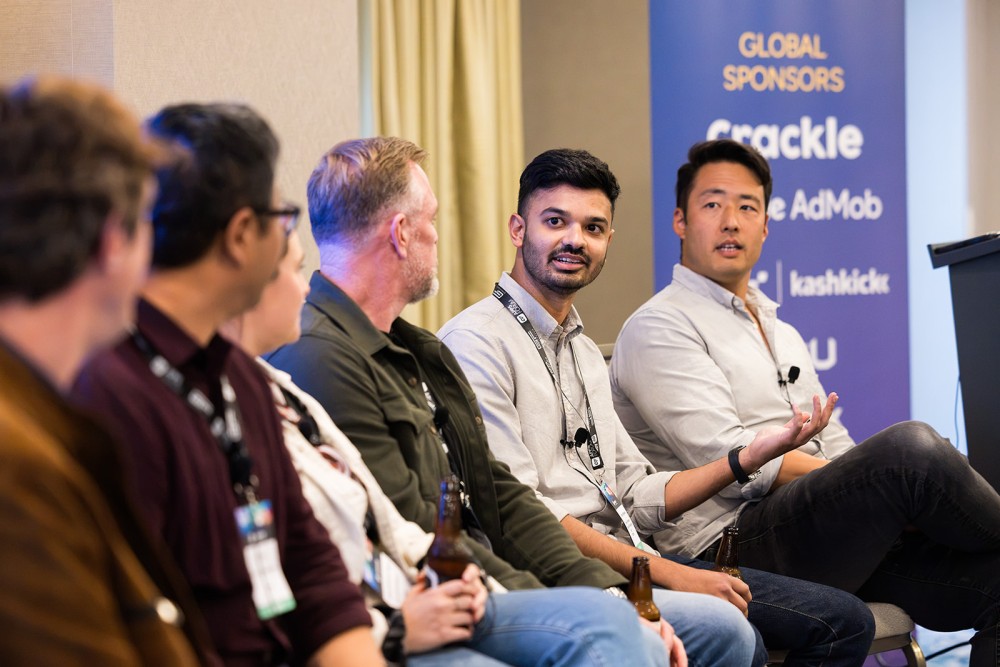
An unfiltered panel of publishers and a demand-side partner on ad quality, segmentation, brand demand, and why every network and publisher needs to look past the next CPM.
The day's closing panel opened with a familiar complaint. "We were here exactly one year ago, still talking about ad quality," said one panelist. "And it's still just as bad." Another corrected them: "It's worse."
That set the tone for a frank conversation about one of the oldest tensions in mobile gaming, which is how to grow ad revenue without eroding the players who generate it.
A tougher market than last year
Panelists agreed that the landscape has shifted. CPMs are up, and ad quality is down. AI-assisted development is also flooding the market with new titles, which one speaker called "the zombie adpocalypse," citing a claim that over two-thirds of new app launches are now low-code or no-code.
Games are also competing for attention with other products. Prediction markets, AI chat apps and drama shorts all borrow heavily from game mechanics, and they are all chasing the same users' time.
From the demand side, the message was that publishers have been "very loud and clear" about not wanting the same demand spread across multiple networks. Diversification and differentiated quality are now central to how networks compete. "If publishers suffer and users aren't happy with the experience, then we all suffer."

Ad quality: why it keeps getting worse
The root cause is simple, according to one publisher-side panelist: "If you only focus on performance, then it does open the door for really ugly ads that perform pretty well to take up more and more share." Broken close buttons, shifting close buttons and close buttons that double as calls to action are all still common.
Large publishers with the resources to tackle this are building layered defences. These include manual QA teams playing the game to capture ads, ad ops review, third-party moderation, and AI models that categorise creatives from extracted frames. One panelist explained the limitation: frame analysis only covers inventory where the publisher can see the creative, which might be around 30% of it. Ads rendered by third-party SDKs stay invisible. Early tests using in-game screenshots suggest full coverage, and therefore proactive blocking, may now be possible.
Most publishers can't build that stack, and running a proprietary SSP to inspect bid requests was described as too expensive by one panelist and not a current priority by another. Instead, the panel's main request was for placement-level controls from networks. "Right now, everything is at the app level, which makes it very hard. It's all or none."
With placement-level controls, publishers could treat new players, returners, payers, and VIPs differently. They could also make a commercial case for networks. "You gotta hit the pocketbook," said one panelist. If a network loses access to 35% of inventory because of its formats, "they'll start listening." One mediation platform was singled out for praise for automatically detecting suspicious user behaviour around ads and suppressing problem creatives.
Why bad ads persist
One panelist was candid about the incentive problem: "We put up bad ads because CPM is typically higher on those ads." When teams
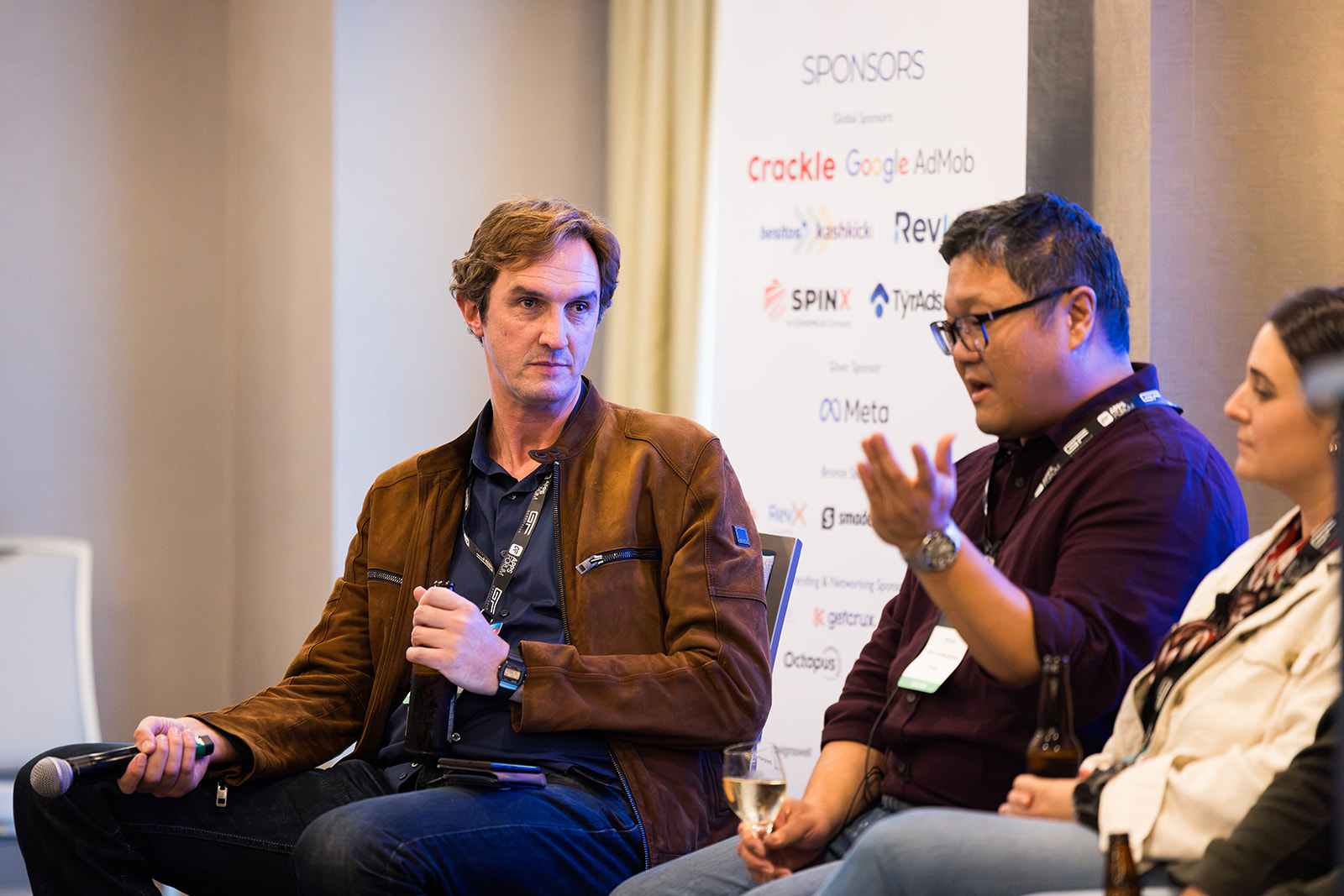
optimise for ARPDAU, nobody wants to absorb a 30% CPM hit.
Their proposed fix was to optimize for LTV instead and penalise networks whose ads hurt retention, which they half-jokingly called a "shittiness multiplier." In practice, that could mean holding the worst offenders back from a player's first seven days while allowing cleaner demand to serve.
The panel also called for collective action. "Maybe we should all go together and say the same thing," one speaker suggested. "If we're all saying it individually, it's not gonna change." Industry-wide ad quality benchmarks were described as entirely achievable.
Can brand demand fill the gap?
The moderator shared figures from a recent political media plan seen ahead of the US midterms:
- CTV at around $65 CPM, against the $15–20 publishers typically receive
- Mobile video at around $30–40, against roughly $2–5 for brand
- Display at around $10
"So, forty dollars went somewhere. Poof, in the supply chain."
Panelists were divided on brand's potential. The sceptical view was that gaming ads served to gamers mid-game are "hard to beat" as a qualified audience, and that brand advertisers lack the identity resolution they expect in-app. The prevailing view was that brand demand doesn't need to compete with gaming CPMs. It needs to be a supplement. "It's not an easy problem, but I think it's possible."
High order-value products such as cookware or insurance policies could work. Getting there requires infrastructure, including new partners, new attribution pathways, and retargeting layered on broad campaigns. Segmentation came up again here. With the right controls, publishers could reserve cleaner brand demand for sensitive cohorts, such as high-value users or players acquired through specific UA channels.
Who owns LTV?
Asked whether ad monetization teams are accountable for retention, the panel answered firmly yes. They added a caveat: "LTV isn't really available." You can optimise for a proxy of LTV." One team described managing to "net value," which measures the incremental value ads create after accounting for impact on IAP, UA and engagement. They work in partnership with both the UA and IAP teams.
AI: help and hot water
AI is speeding up internal workflows and QA. It is also causing problems in UA creative, where AI-generated ads with "six fingers or two noses" have been approved without proper human review, drawing accusations of "AI slop" from player communities.
Several panelists were more optimistic about AI's potential in live operations. It could personalise content for returning players instead of "bombarding" them with every feature they missed. That matters because, as one speaker noted, most gaming revenue still comes from titles that have been live for over five years, and those games have the most to gain from protecting retention.
Final takeaways
Retention is back in focus. After cycles of ad-heavy hyper-casual and IAP-heavy design, studios are leaning towards "cozy casual" and accepting short-term monetization sacrifices to keep players longer.
Interstitials aren't the whole story. Some studios have switched interstitials off entirely and seen no retention gain. "It's more of a product issue rather than an ad issue." Rewarded video built into LiveOps progression can lift both retention and revenue.
Publishers hold more power than they use. "There is no industry unless we have the impressions." As one panelist put it last year: "It's my inventory. I get to decide where I sell it."
Player trust is a long game. One publisher described retrofitting an opt-in, rewarded-only ad experience into a long-running title in a way that improved it for players. Stewards of established IP, they argued, naturally think harder about lifetime value.
Control what you can. Ad quality won't be fixed in six months, so publishers should use their own data. That means adapting the ad experience within a session, after a win, a loss, or three losses in a row, and building new churn and bounce metrics tied to in-session behaviour.
Networks are adjusting, too. The demand-side view was that last-click attribution makes LTV optimisation hard for everyone. Changes such as clear ad attribution banners, visible countdowns and consistent close-button placement are part of an effort to push in the opposite direction from the industry's worst actors.
The panel closed with cautious optimism. Consolidation and layoffs have slowed new publisher growth in the US, while APAC and EMEA are growing faster. In the words of one panelist: "There's a lot of smart people in this room. I'm still very optimistic."



Home of the Gamesforum events series and leading mobile game analysis. Discover everything you need to know about mobile games marketing and monetization.